ERN RARE-LIVER Workshop
ERN RARE-LIVER Workshop
Rare Liver Diseases and Pregnancy Care
What are the risks and care strategies for pregnancy with primary sclerosing cholangitis?
For families affected by primary sclerosing cholangitis (PSC) and other rare liver diseases, there can be increased risks and anxiety around pregnancy.
Although pregnancy can pose risks for both mother and foetus, most pregnancies for PSC patients result in successful outcomes. Risks can be better managed through pre-pregnancy planning, evidence-based clinical management, and coordinated multidisciplinary care between specialists.
Priorities for safe pregnancy care include:
- Pre-pregnancy planning and individualised risk assessment
- Coordinated multidisciplinary clinical care across liver, obstetric and IBD teams where necessary
- Evidence-based medical management tailored to the patient’s needs
What was achieved at the ERN RARE-LIVER pregnancy workshop?
The ERN RARE-LIVER workshop at University Hospital Centre Zagreb brought together 30 leading clinicians, researchers, and patient advocates from across Europe to address clinical gaps in pregnancy care.
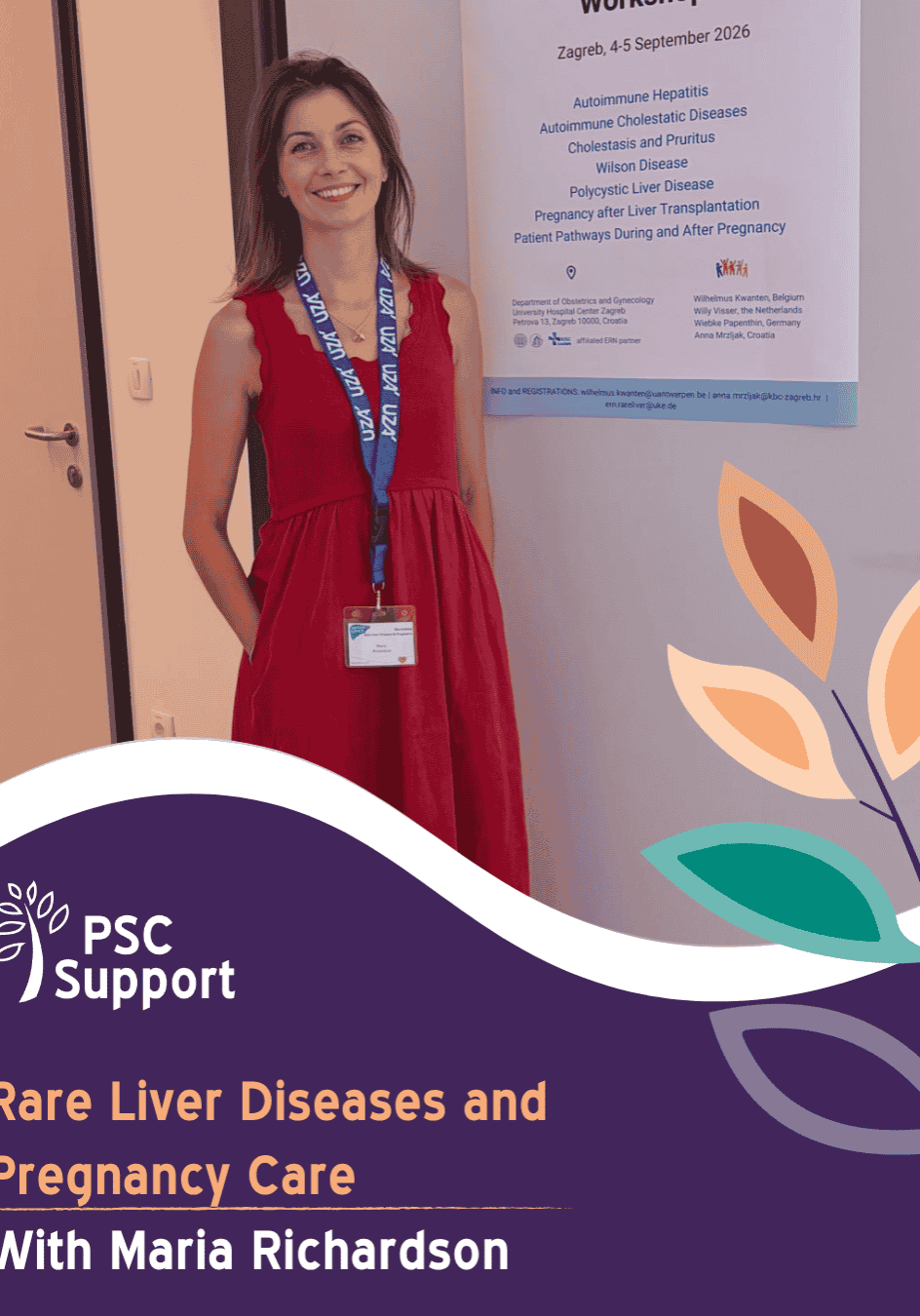
Representing PSC Support, senior research volunteer Maria Richardson presented at this workshop to share her real-world patient insights into pregnancy with cholestatic liver disease, and contributed to discussions to ensure patient experiences directly inform emerging clinical management pathways.
Primary objectives of the workshop included:
- Enhancing clinical knowledge and empowering patients and medical professionals through education
- Identifying unmet clinical and research needs in maternal liver health
- Developing a draft patient care pathway which can be used as a template for medical practitioners and patients for pregnancy in rare liver disease
How is PSC Support contributing to international pregnancy care pathways?
European collaboration strengthens the collective voice of rare liver disease communities to drive research and improve care.
Presenting at the event, Maria Richardson stated: “Not only was I able to present on my experience of PSC and pregnancy to an eminent and engaged audience, but I was able to have real input into the draft new patient pathway for pregnancy with rare liver disease.”
Highlighting the value of joint advocacy through ERN RARE-LIVER, Maria added: “We are stronger together - acting as part of a larger group of rare diseases, we have a bigger platform and are better able to affect change.”